

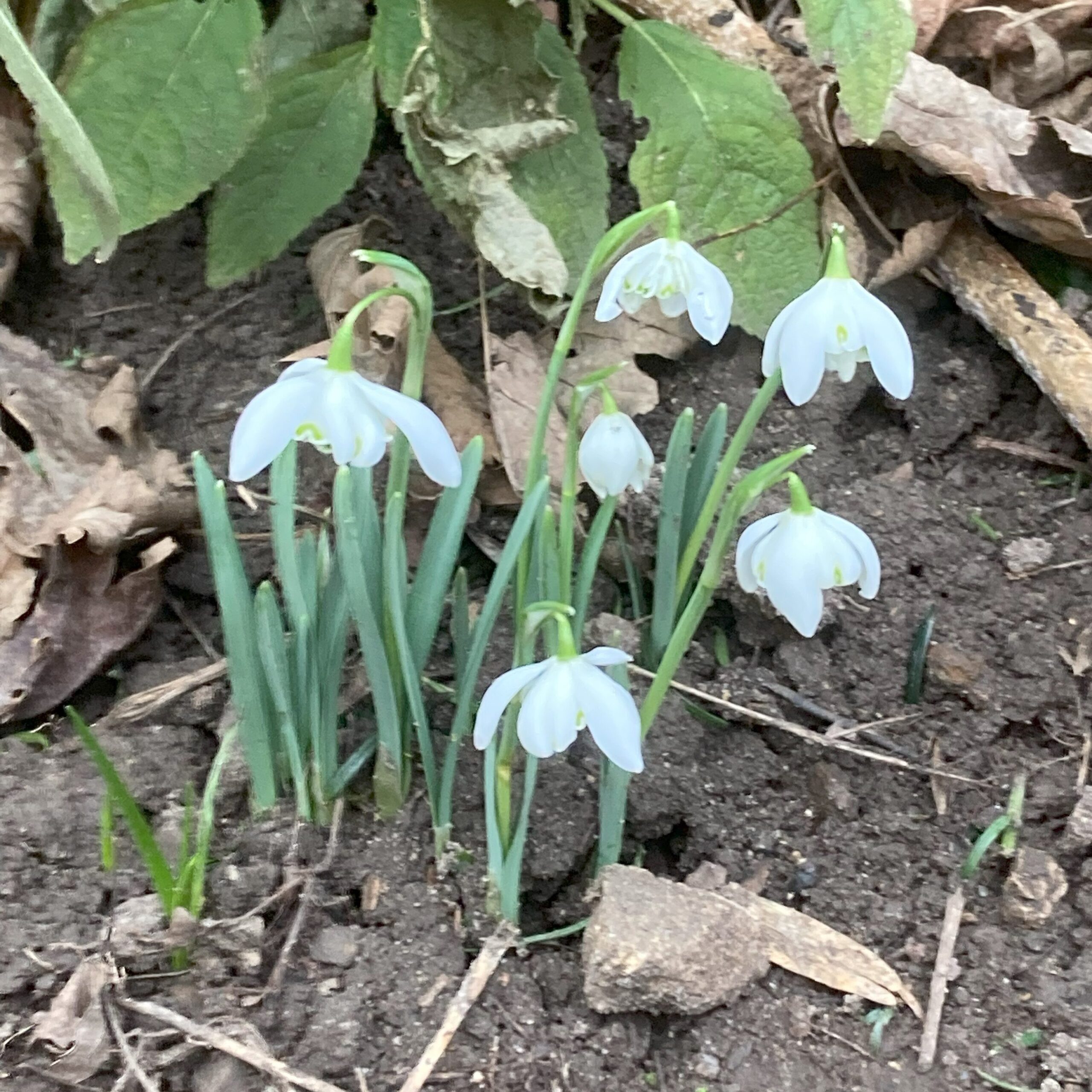
There is something deeply hopeful about seeing the snowdrops emerging in the first months of the year. Even if it isn’t Spring yet (as my daughter tried to persuade me last week – “look Mummy, there are snowdrops, it must be Spring”) snowdrops bring a clear sign that Spring is on it’s way, that new life is starting to emerge from amongst last year’s old leaves and dead stems, and that bulbs that have lain unnoticed in the soil all year can send up leaves and flowers when the time is right.
The flowers, though very beautiful, are small and not particularly dramatic, and at many times of year would fade into the background or be overwhelmed amid larger or more colourful plants, but during February when the days are still short and we’ve had weeks of rain and wind, they stand out.

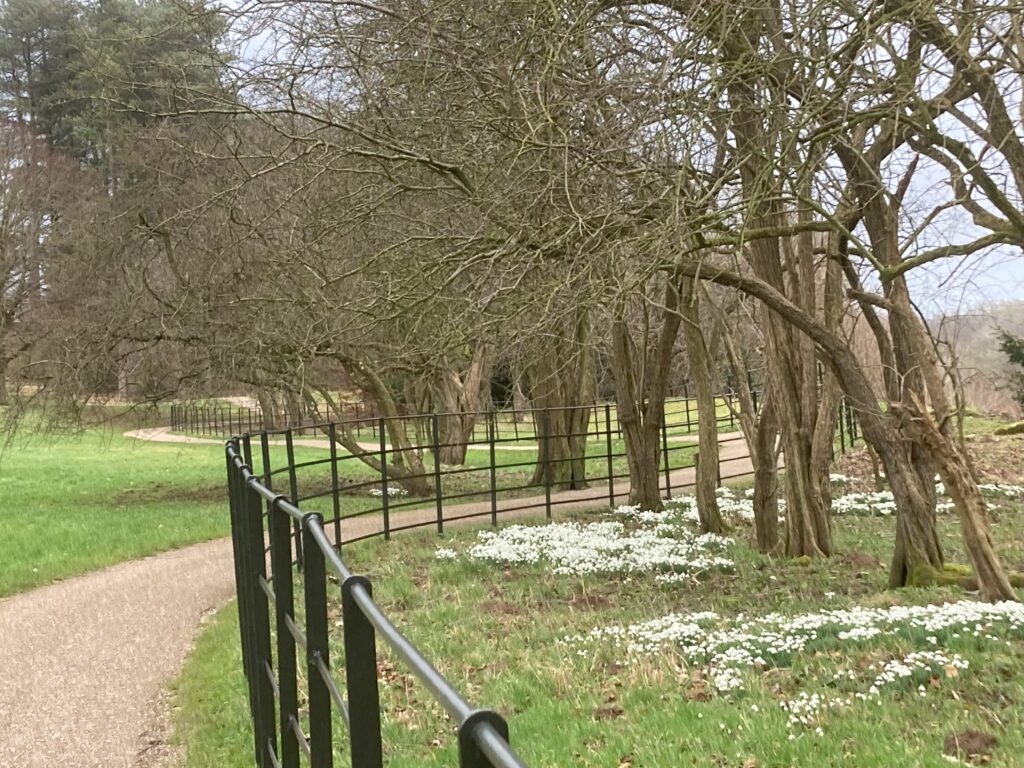
The flowers are not native to the UK (their native range is mainland Europe), with the first mention of wild snowdrops in the 1770s in Gloucestershire and Worcestershire. These are likely to have escaped from gardens, where they may have been grown since the 15th century.
Snowdrops (Galanthus nivalus) have also been known as snow bells, fair maids of February, and Candlemas bells, amongst other names, and are the flower of the Purification of the Virgin Mary, the Feast of Candlemas, on 2nd February. The flowers have a long history as a sign of hope and purity.
In the Ladybird Nature Book What To Look For In Winter, the introduction concludes by observing that “They [the bulbs] seem to know that the world is turning, and that the springtime is sure to come.” The flowers remind me that the seasons of nature and life are always moving, and that even during the cold and grey seasons of life, a new season is on its way, and the bulbs or seeds planted earlier will, when the time is right, start to emerge.
References
- What To Look For In Winter: A Ladybird Nature Book by E. L. Grant Watson, 1959
- Britain’s Wild Flowers: A Treasury of Traditions, Superstitions, Remedies and Literature by Rosamund Richardson, 2017
- https://www.botanic.cam.ac.uk/the-garden/gardens-plantings/snowdrops/
- https://www.woodlandtrust.org.uk/trees-woods-and-wildlife/plants/wild-flowers/snowdrop/ (Also visit their page to report your first sighting of snowdrops for the Nature’s Calendar survey.)

